

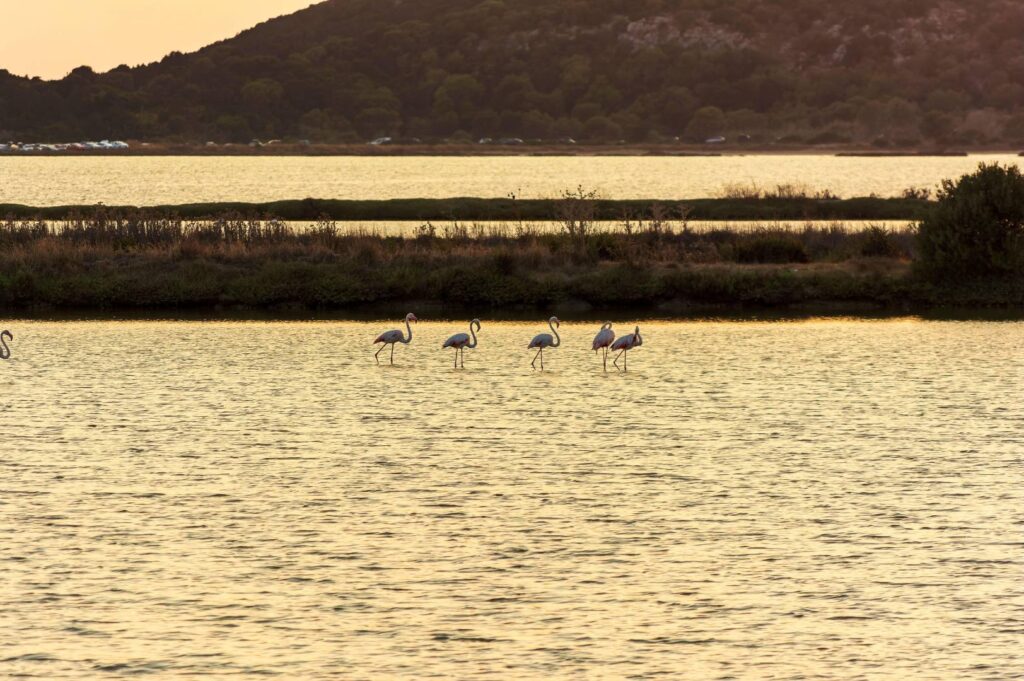
Most people come to Gialova for the beaches. Some come specifically for the lagoon. Once you learn what lives there, you’ll understand why it’s worth at least a morning of your trip.
The Gialova Lagoon is a protected Natura 2000 wetland just north of Voidokilia beach. It is the southernmost important wetland in mainland Europe, making it a crucial stopover for migratory birds traveling between Africa and northern Europe. The numbers speak for themselves: 271 recorded bird species.
Why Gialova Lagoon is Special
Geographically, Gialova is located at the point where the Mediterranean Sea narrows between Europe and Africa. For birds crossing the sea, this lagoon is the first point of fresh water and the first safe haven after a huge, exhausting journey
Beyond the birds, the lagoon is home to theonly wild population of African chameleons in Europe. They arrived here centuries ago (probably on trading ships) and have established a self-sustaining population in the dense vegetation along the edge of the lagoon. Spotting them requires patience, but if you take your time, you have a real chance.
What to Look for and When
Spring (March–May): The best time for birdwatching. This is the time when migratory birds head north and stop here to refuel. Flamingos gather in impressive numbers while the lagoon is filled with herons, egrets, stilts, kingfishers and reed warblers. The surrounding vegetation is lush; this of course makes spotting the African chameleon a little more difficult, but bird activity is at its absolute peak.
Summer (June–August): Quieter for migrations but resident species are breeding. Pelicans occasionally appear. The heat means most activity occurs in the first two hours after sunrise.
Autumn (September–October): Second peak season. Migratory birds returning south stop again. Flamingos return in force. Water levels are often lower in late summer, which brings wading birds together and makes them easier to spot.
Winter (November–February): Colder and quieter, but wintering species are still seen. Dedicated observers visit in winter, especially for certain duck and raptor species.
How to Get There and Get Around
Practical planning is key here. The lagoon trail runs along the eastern side from the village of Gialova to Voidokilia — it’s flat, mostly paved with some gravel sections, and about 8–10 km in total.
Best way: by bike or e-bike.
Walking is okay for the first kilometer near the village, but to cover the entire trail and reach the best viewpoints near Voidokilia, you need transportation. An e-bike from Martin’s Rentals gives you the flexibility to stop whenever you want, move quietly, and cover the entire route without getting exhausted from the summer heat.
Scooters and cars are not suitable for the lagoon trail — the trail is quite narrow in some places and the noise disturbs the wildlife. Bicycles and e-bikes are suitable for this route.
What to Bring
- Binoculars. At least 8×42. Most birds will be 50–200 meters away over open water. Without binoculars you will see shapes and colors but you will miss the detail that makes the experience rewarding.
- Water. The lagoon path has no cafes or shops. Take more than you think you need.
- Light, neutral clothing. Bright colors scare away birds. Earth tones or simple light gray work best.
- Sun protection. The lagoon path is almost completely exposed. Hat, sunscreen and consider UV protection for a long morning. The Martin’s store in Gialova has sunscreen, hats and UV shirts.
- Be patient. Chameleons won’t come to you. Walk slowly, look carefully at the vegetation near the path and give it time.
Practical Tips for the Best Experience
Start at dawn. Bird activity peaks in the first two hours after sunrise. In summer, this means being on the trail by 06:30–07:00. In spring or fall, 07:00–08:00 is fine.
Go slowly. This is not a trail for exercise. Stop often and just listen. The sounds will lead you to activity that, if you were in a hurry, you would miss completely.
Respect the protected area. Don’t stray from the trail to approach nesting birds. Do not disturb the vegetation near the water’s edge. The protected status of this lagoon is what makes it worth visiting.
Combine with Voidokilia. The lagoon trail ends near Voidokilia beach. If you start early for the birds, you can be at one of the most beautiful beaches in Greece by 09:00, before the crowds arrive.
Rent an e-bike from Martin’s Rentals — the quietest and most flexible way to explore the lagoon trail.